The bird behind our symbol
Meet the
Golden Eagle.
Aquila chrysaetos is one of the Northern Hemisphere’s most widely distributed and admired birds of prey—a master of open sky, rugged country, patience, power, and purposeful flight.
Explore the Golden Eagle family ↓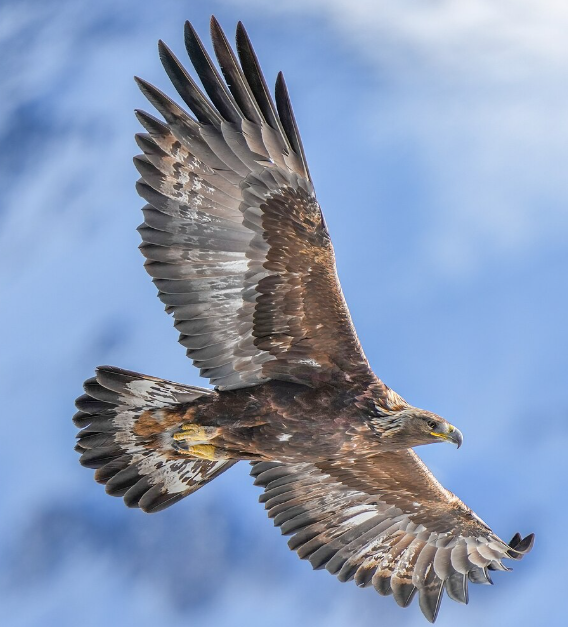
Power shaped for flight
Remarkable by every measure.
Broad wings with finger-like tips let Golden Eagles soar for long periods, often holding their wings in a shallow V. Their powerful feet and sharp talons are built for hunting, while their immense territories demand endurance, memory, and an extraordinary command of the landscape.
Not simply “gold”
A living palette of earth, shadow, and sunlight.
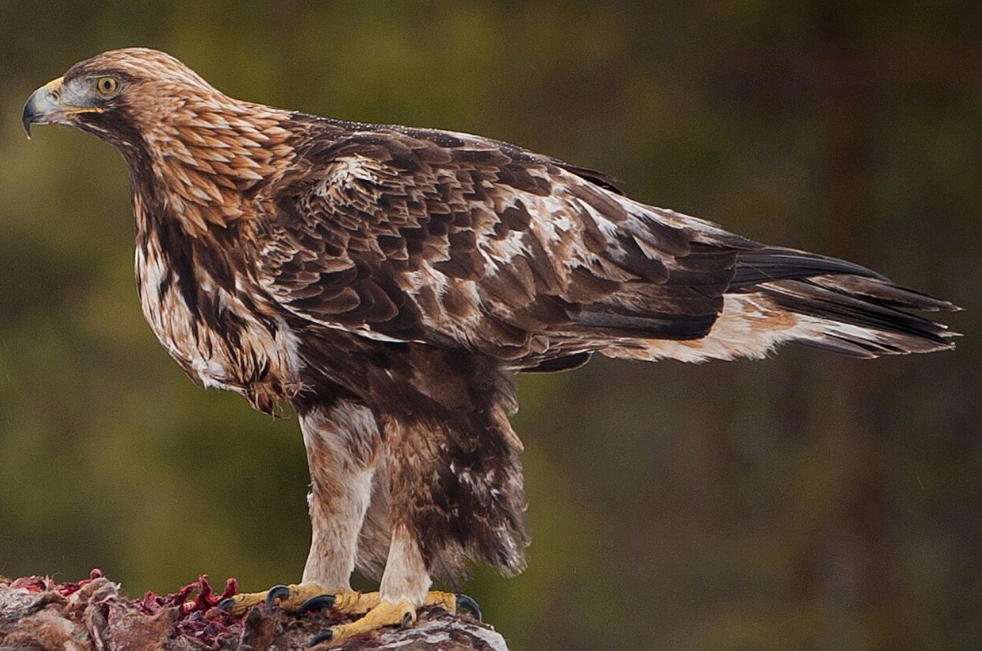
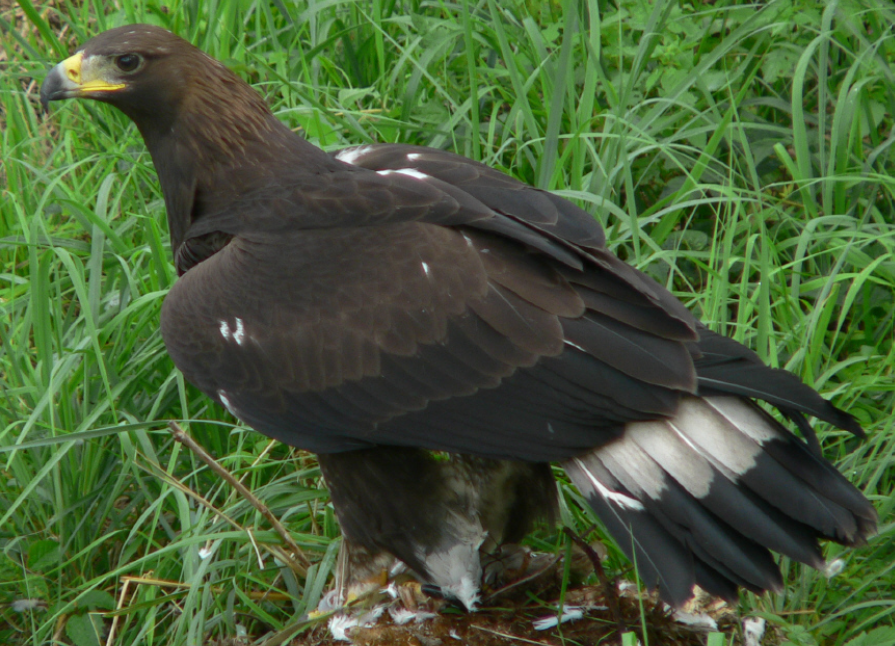
Adults are primarily dark brown, with the warm golden-brown crown and nape that give the species its name. Young birds are usually darker and may show striking white areas in the wings and tail. Their final adult plumage may take more than five years to develop.
One species · a world of variation
Six Golden Eagle subspecies.
These are not six separate species. They are regional forms with overlapping differences in size and plumage. Even this six-part classification is debated: some genetic work supports grouping them into two broader lineages.
Europe through western Russia
European Golden Eagle
A. c. chrysaetosOften the palest form, with tawny golden-brown upperparts and a gleaming golden nape.
Iberia, North Africa, the Middle East and Caucasus
Iberian Golden Eagle
A. c. homeyeriSlightly smaller and darker than the European form, with a shorter, rusty nape.
Central Asia and the Himalayas
Himalayan or Asian Golden Eagle
A. c. daphaneaThe largest on average; very dark-backed with a rich brown-red nape.
Northern Japan and parts of Korea
Japanese Golden Eagle
A. c. japonicaThe smallest and darkest form, with a bright rufous nape and frequent white mottling.
Alaska, western Canada, the western United States and Mexico
North American Golden Eagle
A. c. canadensisDark brown to blackish above, with long, rusty-red feathers across the nape and upper neck.
Western Siberia across Russia to Kamchatka
Siberian Golden Eagle
A. c. kamtschaticaA large form with plumage much like the North American Golden Eagle.
Across the Northern Hemisphere
Wild spaces, high places.
Golden Eagles range across broad stretches of Eurasia, North America, and parts of North Africa. They favor open and semi-open country where rising air supports soaring and prey can be seen: mountains, cliffs, plateaus, grasslands, shrublands, deserts, tundra, and wide valleys.
Pairs build large nests on cliffs and other elevated sites and may return to them over many breeding seasons. They are monogamous and may remain together for years or for life. Hares, rabbits, marmots, and ground squirrels are among their most common prey.
Earth, sky, and meaning
A powerful symbol—held in many different ways.
Across many societies and mythological traditions, eagles have come to represent power, freedom, divine authority, wisdom, and the meeting place between earth and sky. They often appear as sacred messengers or intermediaries—but their meaning is not the same everywhere.
The Indigenous peoples of North America are many distinct nations, each with their own cultures, languages, histories, and spiritual traditions. In some traditions, eagles are honored as sacred beings or messengers to the Creator and associated with courage, strength, prayer, and spiritual connection—a bridge between human and spirit worlds.
These living meanings belong to the specific peoples and traditions that hold them. We share this perspective with respect, without treating the many Indigenous cultures of North America as one belief system.
Learn about the National Eagle Repository ↗Watch them fly
See the Golden Eagle in motion.
The Majesty of the Golden Eagle
National Geographic WILD UK
Open on YouTube ↗Golden Eagle Things You Need To Know!
A guided introduction to this powerful raptor.
Open on YouTube ↗
Golden Eagle Messengers
Wisdom has wings.
The real Golden Eagle gives our movement more than a beautiful image. Its attentive vision, purposeful flight, endurance, and connection to wide landscapes reflect the qualities Senior Voices PDX hopes to carry into community life.
Meet the people behind Senior Voices PDX →Continue exploring: Read the detailed Golden Eagle article on Wikipedia ↗, including taxonomy, distribution, behavior, conservation, and image credits. Species facts and subspecies summaries on this page were adapted from that resource.